
Analysis of Casting Defects: How Poor Dewaxing and Inadequate Firing Cause Carbon Contamination
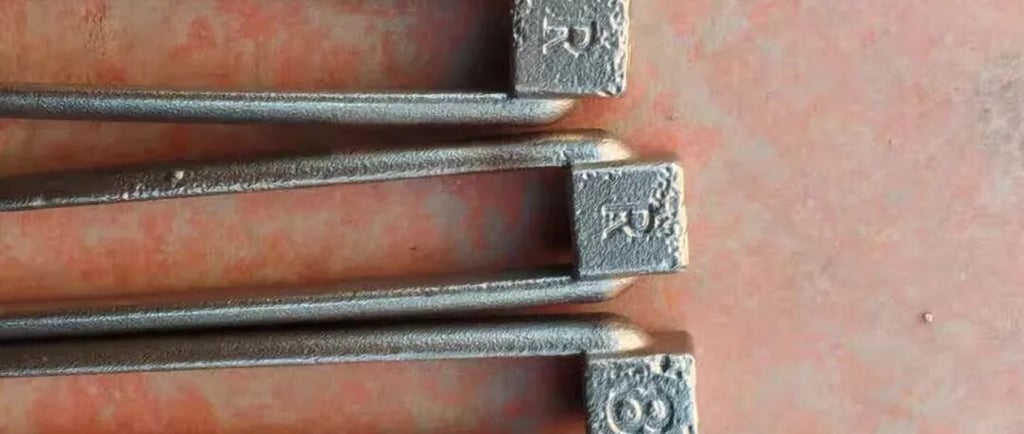
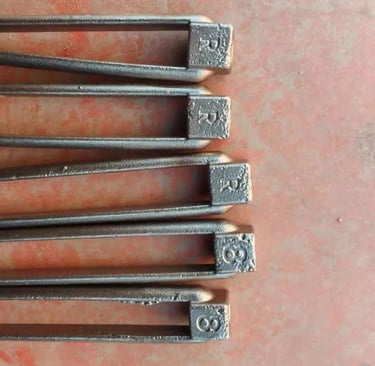
In a TikTok precision casting exchange group, a member raised an issue regarding a product with surface defects consistently appearing at the same location—a clear indication of a recurring problem. The attached photo (Figure 1) shows a rough surface caused by carbon contamination, a defect resulting from incomplete dewaxing and improper firing. This case offers a clearer and more typical example of such defects compared to previous discussions.
heweifeng
2/1/20262 min read
Analysis of Casting Defects: How Poor Dewaxing and Inadequate Firing Cause Carbon Contamination
Figure 1: Rough surface on casting due to carbon contamination.
Why is this defined as a defect caused by poor dewaxing and inadequate firing? First, incomplete dewaxing left residual wax inside the mold. The root cause lies in the gating system design, which failed to adequately address dewaxing requirements, leading to wax retention after dewaxing.
The issue is further attributed to inadequate firing because residual wax in the mold was not completely burned off, resulting in carbon contamination. This contamination accumulated in areas with wax residue, causing the rough surface observed.
Judging by its appearance, this casting seems to be an ordinary hardware component, likely low in value. However, it is puzzling that such a product, worth around a thousand yuan, ended up with these defects. The part is not particularly complex, but the additional costs of repair welding and polishing make it a case of "turning tofu into meat prices"—unnecessary expense for simple fixes.
We share this case not to delve deeply into technicalities but to remind newcomers in the industry how to avoid such mistakes.
Key Points:
The designer likely aimed to improve process yield by grouping multiple patterns to reduce costs—a valid goal. However, the gating design neglected dewaxing considerations. For this product, a lap-joint gate could have ensured smooth dewaxing without significantly affecting grouping efficiency. Instead, the gate was placed between blocks at both ends of the casting, which became the root cause of the problem.
The emphasis on grouping efficiency may have led to densely arranged patterns, resulting in a thick and dense mold. This further hindered complete dewaxing. During firing, the simplicity of the product likely led to underestimating the required temperature and duration, ultimately producing the defect.
Hypothetical Solution:
Had the gating design been reconsidered, reviewed by a peer, or had someone noticed the risk of wax residue and suggested higher firing temperatures or longer durations, this defect could have been avoided.
Conclusion:
No one is perfect—everyone makes mistakes. The purpose of discussing this case is to learn from these errors and grow. By paying attention to design details and process controls, similar issues can be prevented in the future.
Quality
Precision manufacturing for diverse industrial applications.
Services
Products
+8615912702921