
Understanding Excess Metal Defects in Investment Casting: Causes, Analysis, and Prevention
Excess metal defects, also known as "extra flesh" on casting surfaces, are common issues in investment casting processes. This article explores whether poor wax pattern cleaning causes shell delamination leading to these defects, analyzes root causes like interlayer separation and associated flaws such as sand inclusions, and provides insights into internal and external factors. Ideal for foundry professionals seeking solutions to improve shell integrity, reduce delamination, and enhance casting quality in precision manufacturing.
heweifeng
2/4/20262 min read
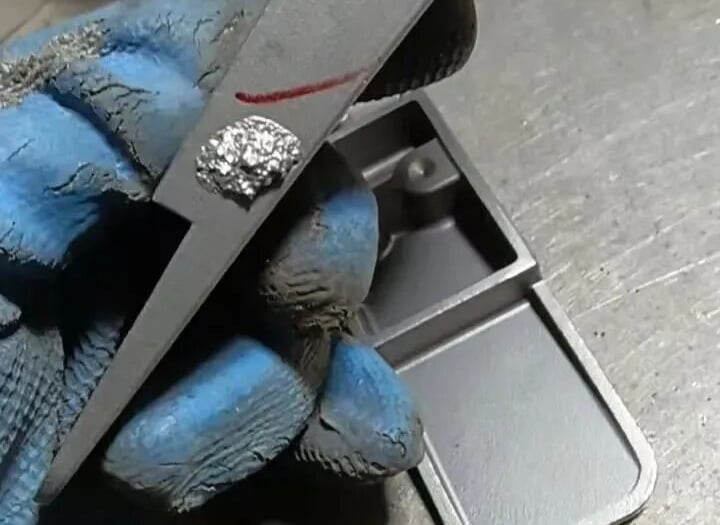
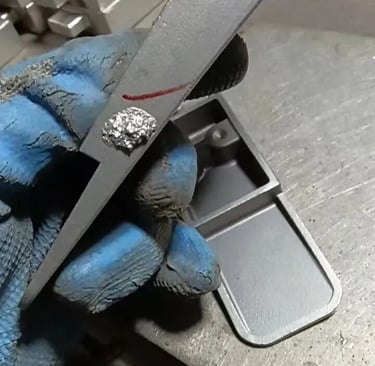
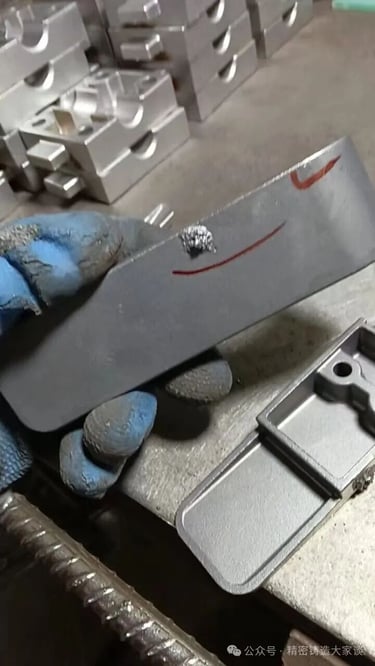
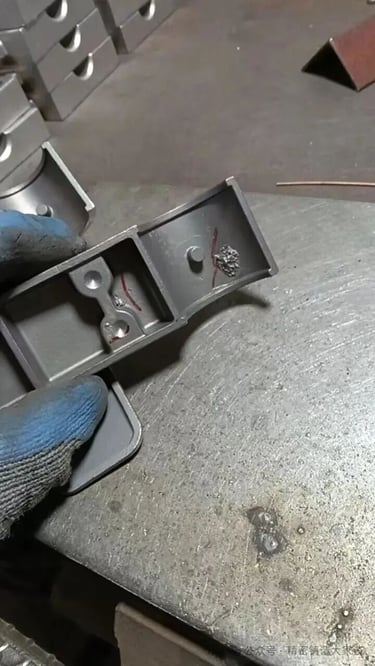
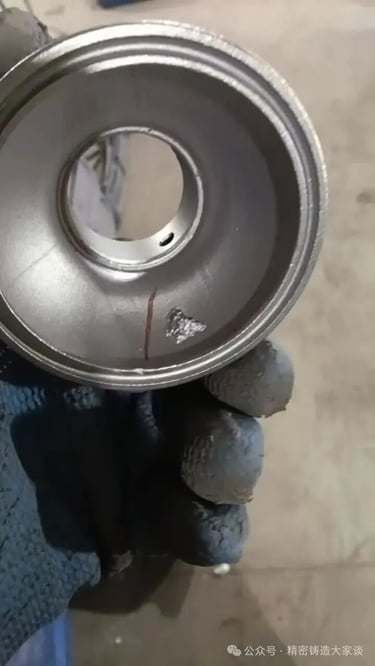
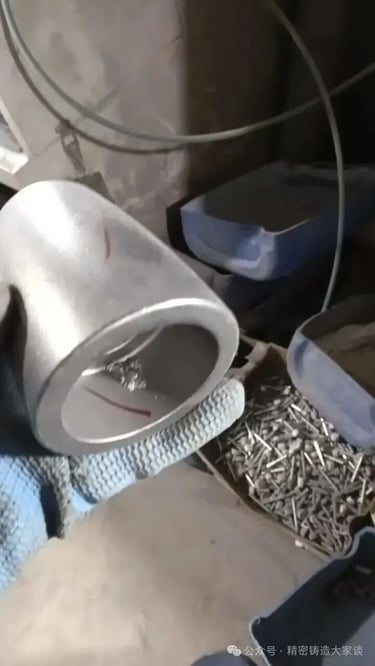
Is this defect caused by inadequate local cleaning of the wax pattern, resulting in poor adhesion between the shell's face coat and the wax, leading to peeling after shell formation? Below are some photos provided, shown in Figures 1 through 5, illustrating excess metal on the casting surface.First, it's important to clarify that this defect has little to do with wax pattern cleaning. Why? Because wax cleaning primarily ensures the face coat slurry adheres or wets the wax surface properly. In reality, this is a delamination defect, where a section of the shell flakes off, causing excess metal in that area. A companion defect is sand inclusion, which occurs when the detached shell fragment drifts to another part of the mold.Why does delamination occur? As the name suggests, it involves separation between layers, eventually leading to local detachment and the formation of excess metal defects at the detached site. We know that silica sol shells are formed through tight interlocking and embedding between layers. If the connections between layers are unreliable or not tightly embedded, delamination is inevitable over time.Delamination has both internal and external causes. Internal causes stem from weak connections or loose embedding. What leads to such weaknesses? For instance, virtual connections between layers, such as when floating sand on the surface creates an illusion of bonding—it's actually the layer connecting to the sand, which is inherently unstable. Excessive dust, fine sand, or high moisture in the sand can replace standard sand during application, resulting in virtual interlayer connections. Additionally, if the backup coat slurry has excessively high viscosity, it reduces penetration for bonding, leading to poor interlayer adhesion. One factory, when first using silica sol, designed backup coats with higher viscosity than transition layers, resulting in shells that couldn't even pass the dewaxing stage—primarily due to flawed viscosity design. Another issue is mismatched sand particle sizes between layers; large discrepancies can weaken connections and sometimes cause anomalies. In one of our productions, mismatched sand between the face and transition layers resulted in castings covered in "cucumber spines" on the surface.We should also mention the casting structure as an internal cause of delamination. Defects often appear on large flat surfaces, internal corners, or blind hole bottoms, mainly because these areas are hard to compact uniformly or consistently.External causes provide the trigger for delamination. Typically, dewaxing, roasting, or pouring can initiate it. During dewaxing, rapid pressure release causes trapped moisture in the shell to evaporate suddenly, damaging fragile connections. If the expansion coefficients of face and backup materials mismatch during roasting, it can also lead to delamination.The development of any issue results from the interplay of internal and external factors: internal causes provide the basis for change, while external ones set the conditions, acting through the internals. We can mitigate external factors by controlling pressure release speed, adjusting refractories, or using mixed refractory blends for transitions. However, addressing internal causes requires stricter adherence to standards and normalized operations.
Quality
Precision manufacturing for diverse industrial applications.
Services
Products
+8615912702921